












%20(1).JPG)
History of the Alhambra
The Alhambra is not visited — it is dreamed.
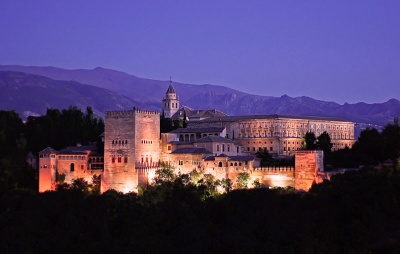
The Alhambra is inseparable from the place where it stands — Granada. Perched on a rocky hilltop of difficult access, on the banks of the Darro river, protected by mountains and surrounded by forest, it rises among the oldest neighbourhoods of the city.
It stands like an imposing reddish castle, its high and robust walls concealing from the outside world the delicate beauty within.
If you are planning to visit, it is important to know that the monument operates a strict daily visitor limit — advance booking well ahead of your visit is strongly recommended. Find out how and where to buy tickets for your Alhambra visit.
Originally conceived as a military zone, the Alhambra became the royal residence of the Granada court in the mid-13th century, following the establishment of the Nasrid kingdom and the construction of the first palace by its founding king, Mohammed ibn Yusuf ben Nasr — better known as Alhamar.
Throughout the 13th, 14th, and 15th centuries, the fortress evolved into a walled citadel of high walls and defensive towers, housing two principal zones: the military area or Alcazaba, barracks of the royal guard, and the medina or palatial city, home to the celebrated Nasrid Palaces and the remains of the houses of nobles and commoners who lived there. The Palace of Charles V — built after the city was taken in 1492 by the Catholic Monarchs — also stands within the medina.
The monumental complex also includes a separate palace facing the Alhambra, surrounded by orchards and gardens — the pleasure and leisure retreat of the Granadan kings: the Generalife.
The name Alhambra derives from an Arabic word meaning "red or vermillion castle" — perhaps a reference to the colour of the towers and walls that encircle the La Sabika hill, which appears silver under starlight but takes on a golden hue in sunlight. A more poetic explanation, recorded by Muslim chroniclers, speaks of the Alhambra being built "illuminated red by the light of torches" — construction having taken place at night.
Originally built for military purposes, the Alhambra was simultaneously an alcazaba (fortress), an alcázar (palace), and a small medina (city). This triple character is key to understanding the many facets of this extraordinary monument.
There is no historical record of the Alhambra as a royal residence before the 13th century, although the fortification existed from the 9th century. The first kings of Granada — the Zirid dynasty — had their castles and palaces on the hills of the Albaicín, of which nothing remains. It was most likely the Zirid emirs who began building the Alhambra, starting in 1238.
The dynasty's founder, Mohammed Al-Ahmar, began by restoring the ancient fortress. His work was completed by his son Mohammed II, whose successors continued the repairs.
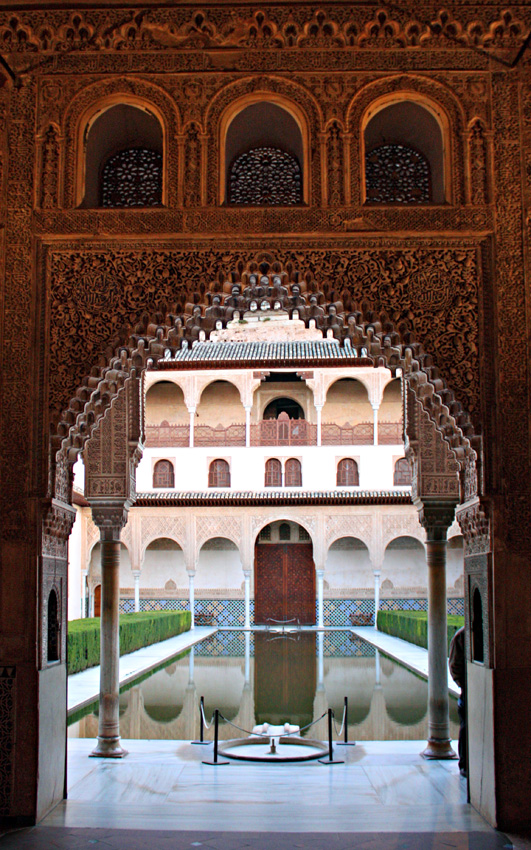
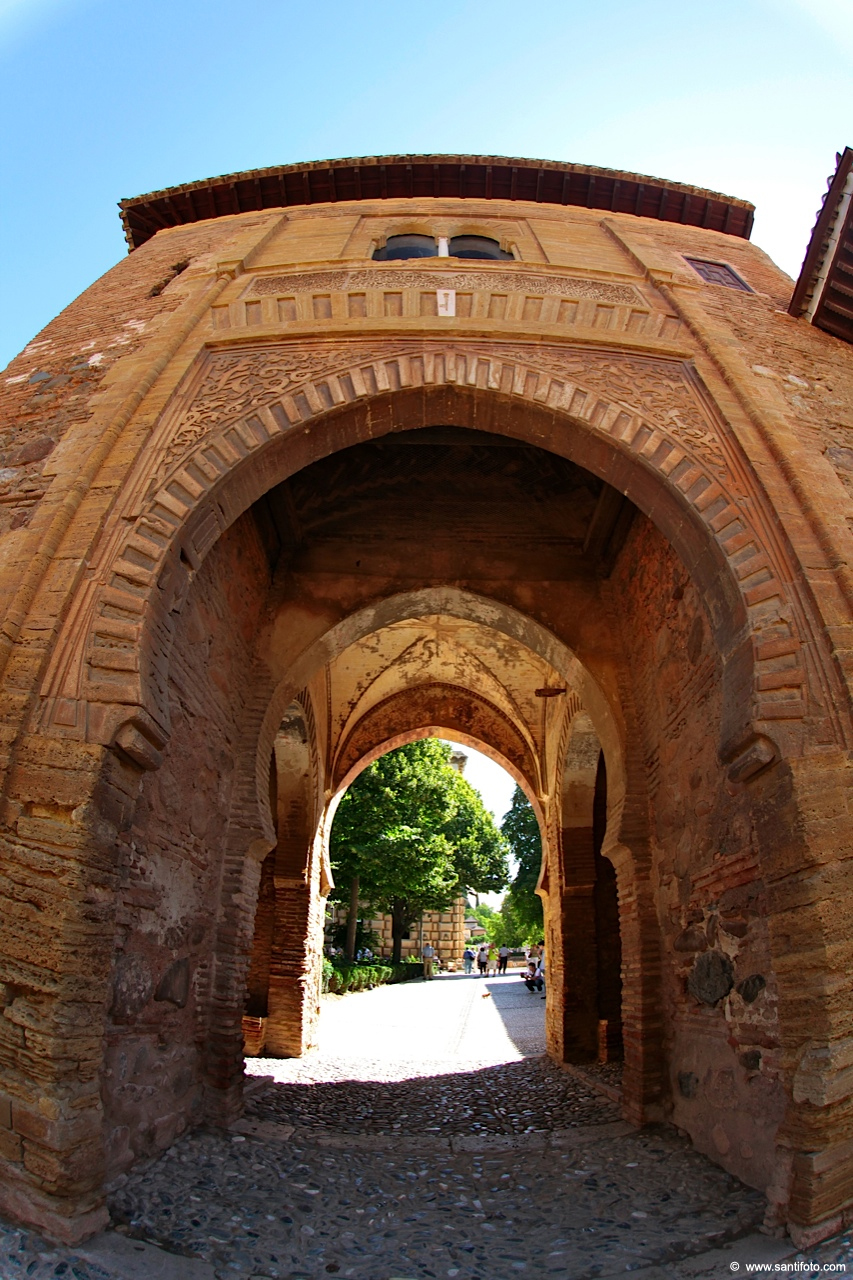
The construction of the palaces (known as the Casa Real Vieja or Old Royal House) dates from the 14th century and is the work of two great kings: Yusuf I and Mohammed V. To the first are attributed, among others, the Comares Quarter, the Puerta de la Justicia, the Baths, and several towers. His son Mohammed V completed the beautification of the palaces with the Hall of the Lions, along with further rooms and fortifications.
The Alhambra became a Christian court in 1492 when the Catholic Monarchs Isabella and Ferdinand conquered Granada. Several structures were subsequently built to house prominent citizens, military barracks, a church, and a Franciscan monastery.
Emperor Charles V, who spent several months in Granada, began construction of the palace that bears his name and made various alterations to the existing buildings — measures that provoked considerable controversy for political reasons. Later kings of the House of Austria did not neglect the monument entirely, each leaving their mark, though more discreetly.
During the 18th century and part of the 19th, the Alhambra fell into neglect, its halls and rooms used as taverns and stables, inhabited by those on the margins of society.
To make matters worse, Napoleonic troops who occupied Granada from 1808 to 1812 turned the palaces into military barracks. During their retreat, they mined and destroyed several towers. Two of them — the Torre de los Siete Suelos and the Torre del Agua — were left in ruins. This remarkable period of neglect continued until 1870, when the Alhambra was declared a national monument. Artists and travellers from around the world rallied to its defence.
From that moment to the present day, the Alhambra has been restored, protected, and improved in many respects — for the wonder and enjoyment of the entire world.
.JPG)
Areas, rooms and layout of the Alhambra:
— The Alcazaba —
The oldest part of the Alhambra, rebuilt on the ruins of a 9th-century castle. The most solid towers are the Torre del Homenaje to the south and the Torre Quebrada at the northwest corner. The most elaborately decorated interior belongs to the Torre de las Armas.
All of them, however, are surpassed by the magnificent Torre de la Vela. Its bell rings on festive occasions, rung by young women who — according to tradition — hope to avoid remaining unmarried. It is the tallest tower in the entire walled complex, and the panorama from its summit takes in a vast horizon.
At the entrance to the Alcazaba lie the pleasant Jardines de los Adarves, also known as the Poets' Gardens. From its battlements the eye is drawn to the towers on the opposite hill — the Torres Bermejas, the "castle of great worth" mentioned in old ballads, and the subject of musical works by Albéniz and Joaquín Rodrigo.
— The Royal House —
A group of small palace buildings surrounded by structures that grew from purely transitional and ornamental needs. Since the 16th century, these Nasrid alcázars have been known as the Casa Real Vieja (Old Royal House), to distinguish them from the later Christian buildings.
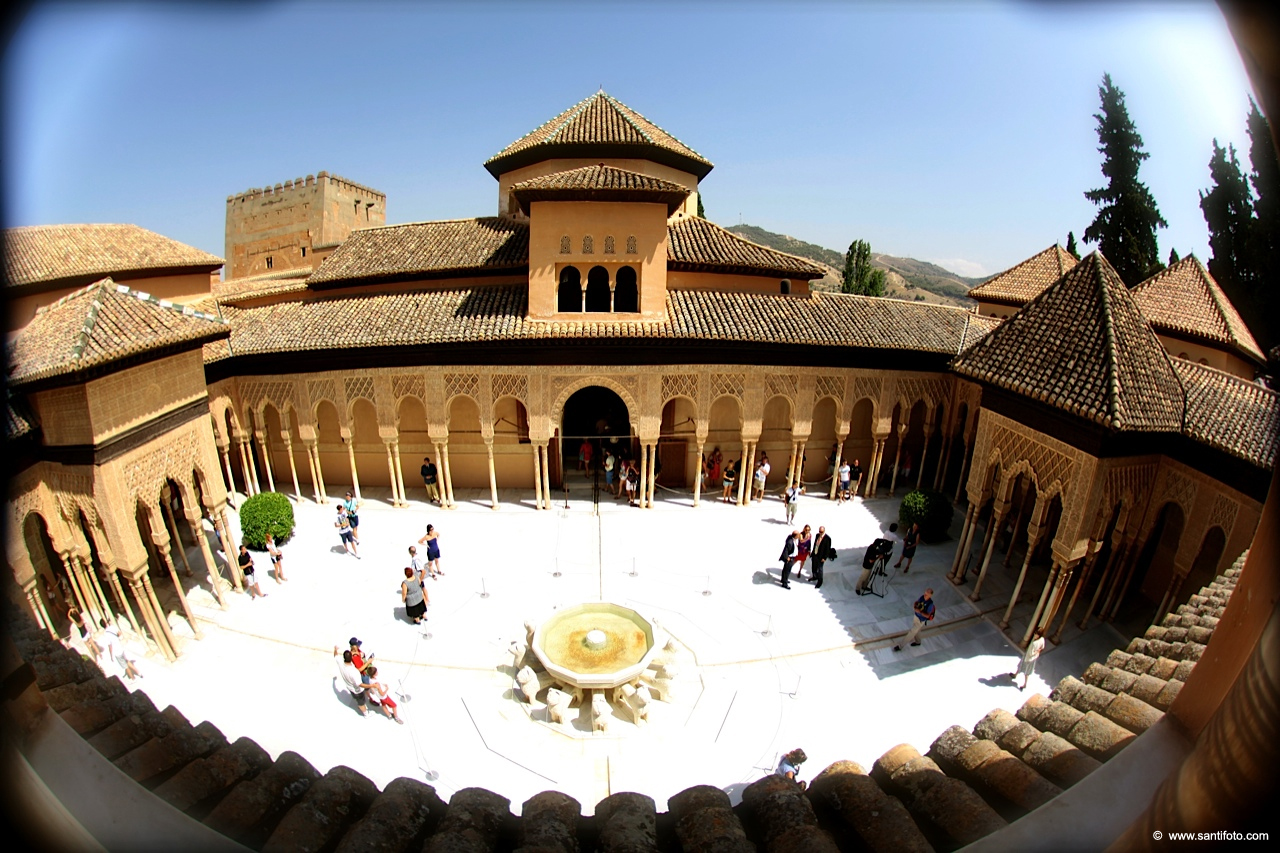
The Alhambra contains the three typical rooms of a Muslim palace, including a reception hall and the Court of the Lions — a spectacular courtyard built by Mohammed V and the finest expression of Islamic art in all its splendour.
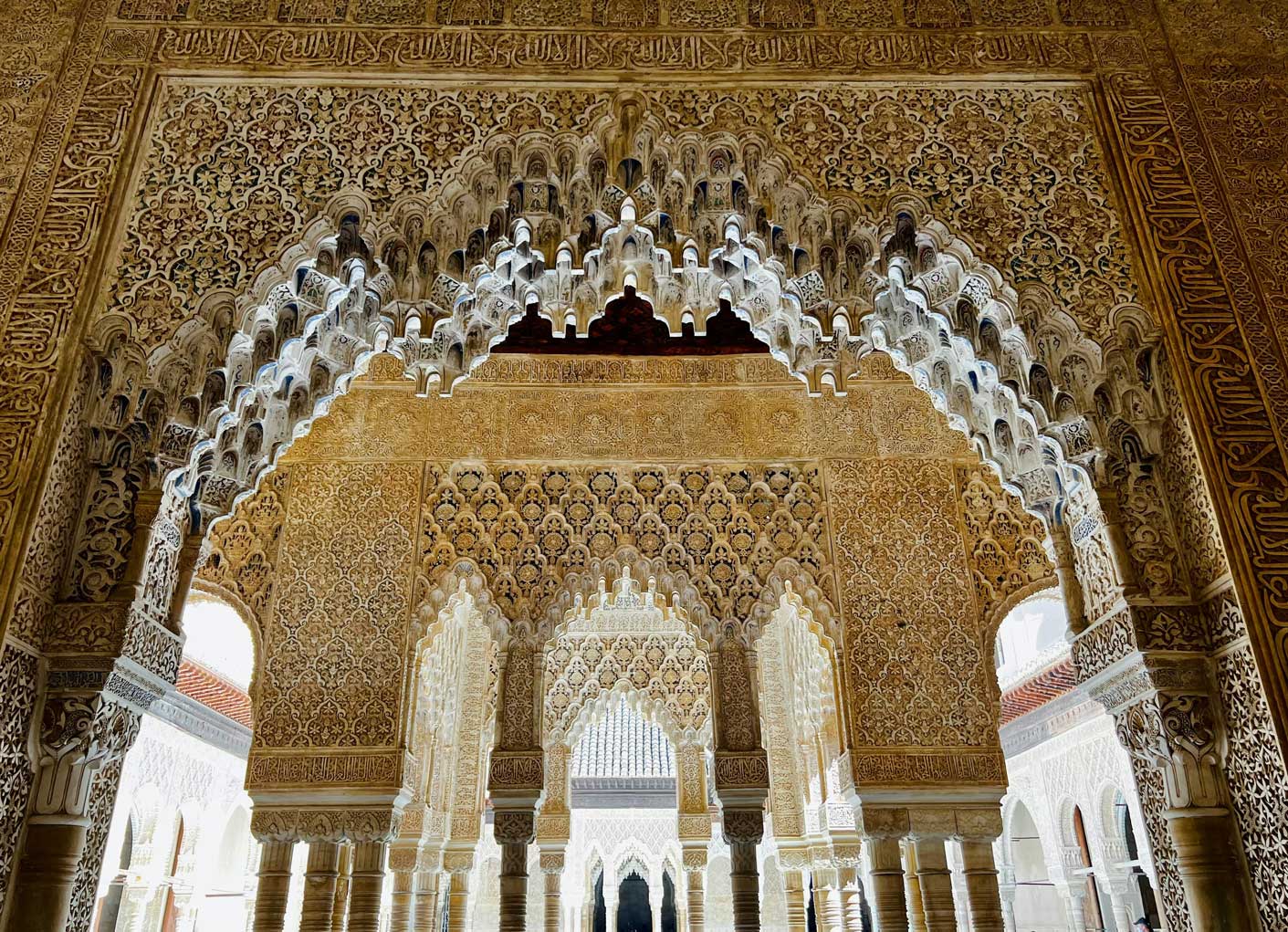
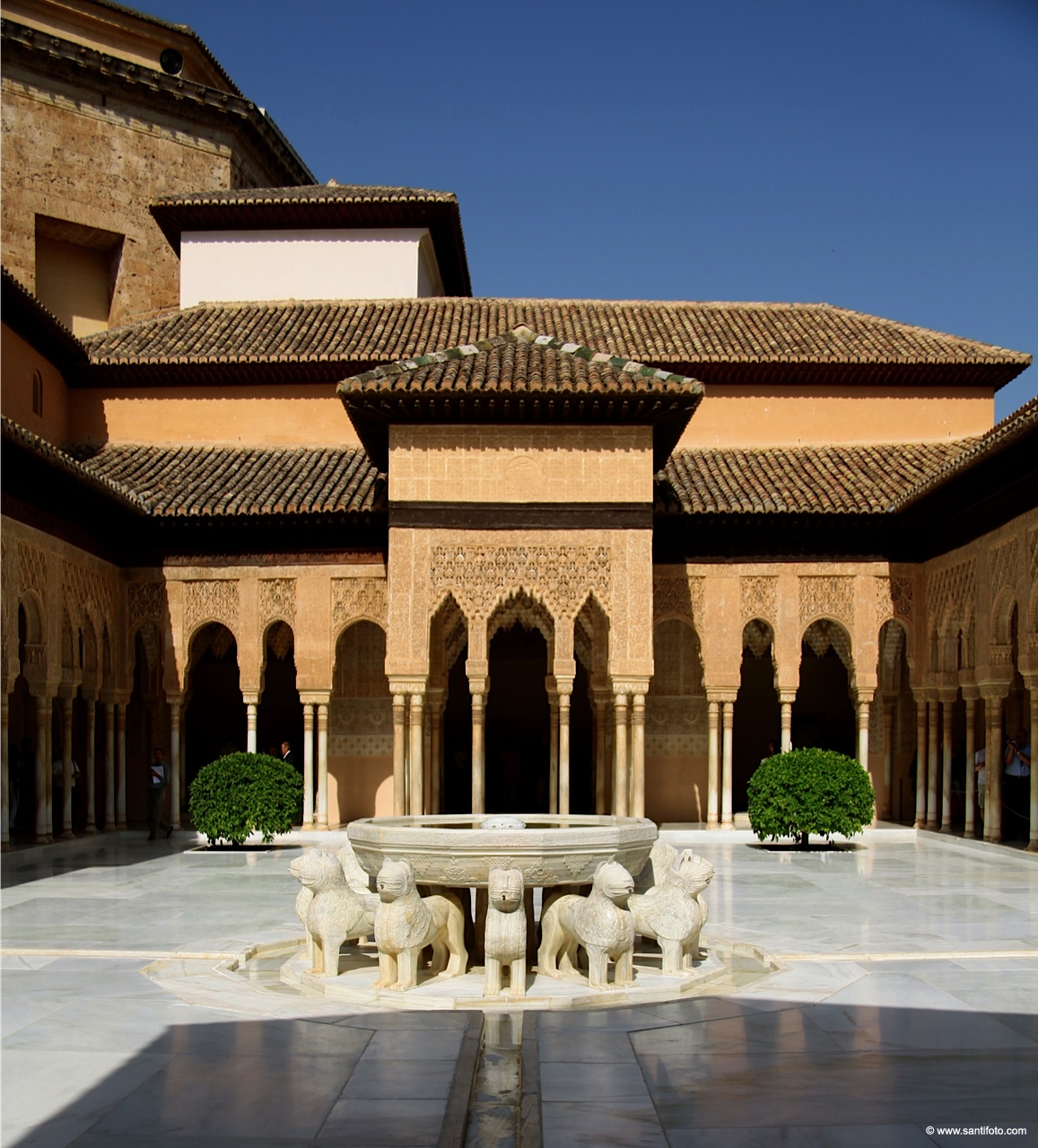
The Court of the Lions is defined by its remarkable originality and decoration — a harmonious blend of Eastern and Western art. Its 124 slender columns surround the fountain resting on the backs of twelve lions. Water is the great protagonist: it rises and overflows from the fountain into the mouths of the lions, from where it flows throughout the courtyard. Four great vestibules surround the space. The first, entered from the Martyrs' Courtyard, is the Sala de los Mozárabes, whose name likely derives from the three arches forming the entrance to the Hall of the Lions.
To the south lies the Hall of the Abencerrajes, famous in legend for its ornate interlocking plasterwork. To the east is the Hall of the Kings — singular in its design, resembling a theatrical stage, divided into three sections by double Mozarabic arches. To the north is the Hall of the Two Sisters, named after the two great marble slabs flanking the fountain. The adjacent vestibule is the Hall of the Ajimeces, with two balconies overlooking the Daraxa Garden. Between these balconies stands the Daraxa Viewpoint — the sultana's bedroom and dressing room, a peaceful and sheltered space.
Through the final vestibule we reach the Queen's Dressing Room (Peinador de la Reina), also known as the Tocador. Designed as the residence of Empress Isabella and later Isabella of Parma, it contains frescoes commemorating Charles V's expedition to La Goleta. Within the Alhambra complex we also find exclusively Western structures — including the Gardens of the Martyrs, where a Discalced Carmelite Monastery once stood.
The Church of Santa María stands on the site of the former royal mosque. The Monastery of San Francisco — today a state-run Parador hotel — was built over an Arab palace and holds sentimental significance: it served as the temporary resting place of the Catholic Monarchs before their remains were transferred to the Royal Chapel. The Palace of Charles V, or New Royal House, was commissioned by the Emperor in an attempt to emulate the palace of the defeated Muslim rulers and serve as his own residence. Construction began in 1527 under Pedro Machuca, who had studied in Italy alongside Michelangelo. Square in plan, it is composed of two sections: the lower in the Tuscan style, the upper with Ionic pilasters.
— The Generalife —
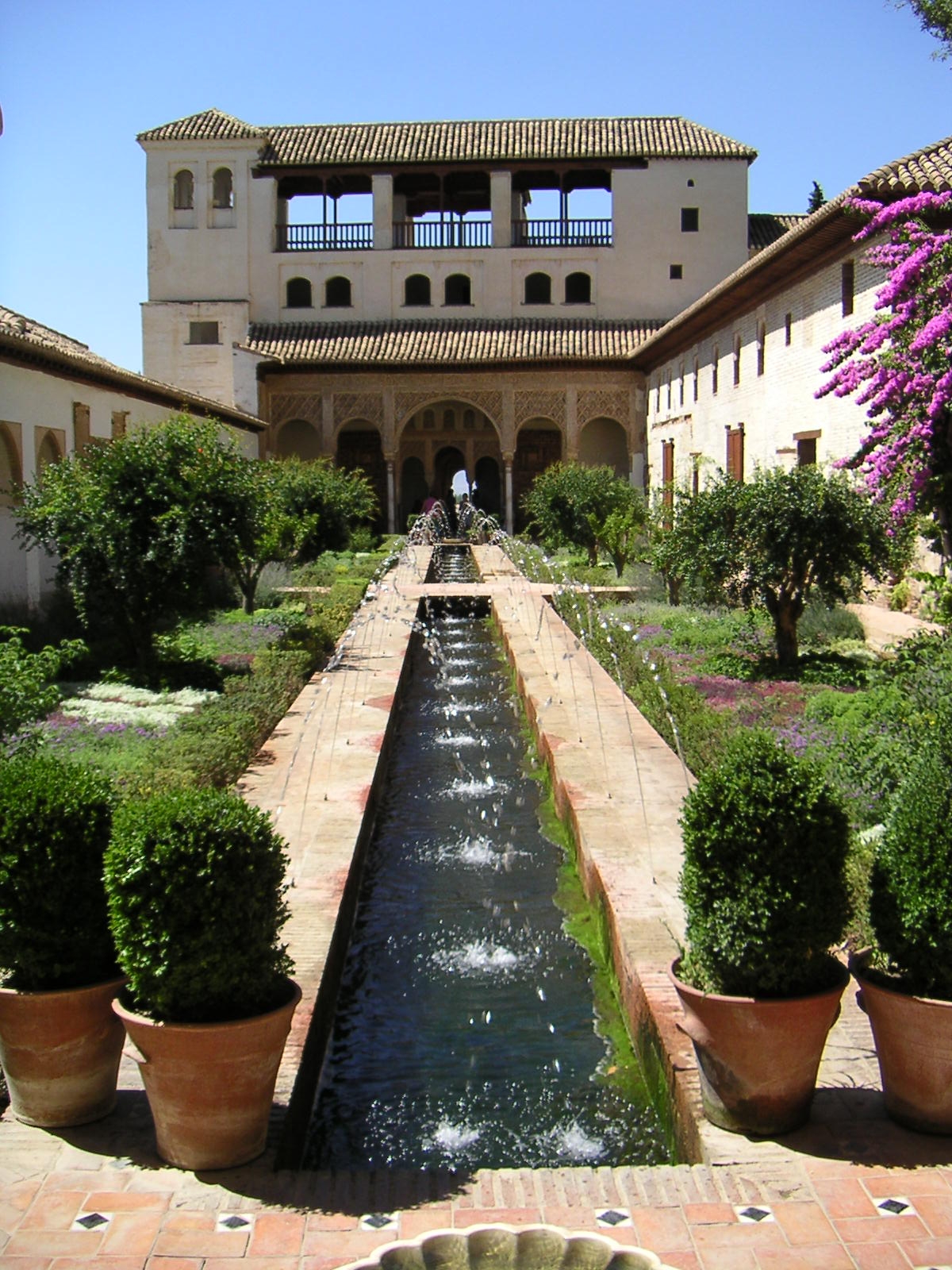
The word "Generalife" has been translated as "garden of paradise", "plantation", or "festive garden".
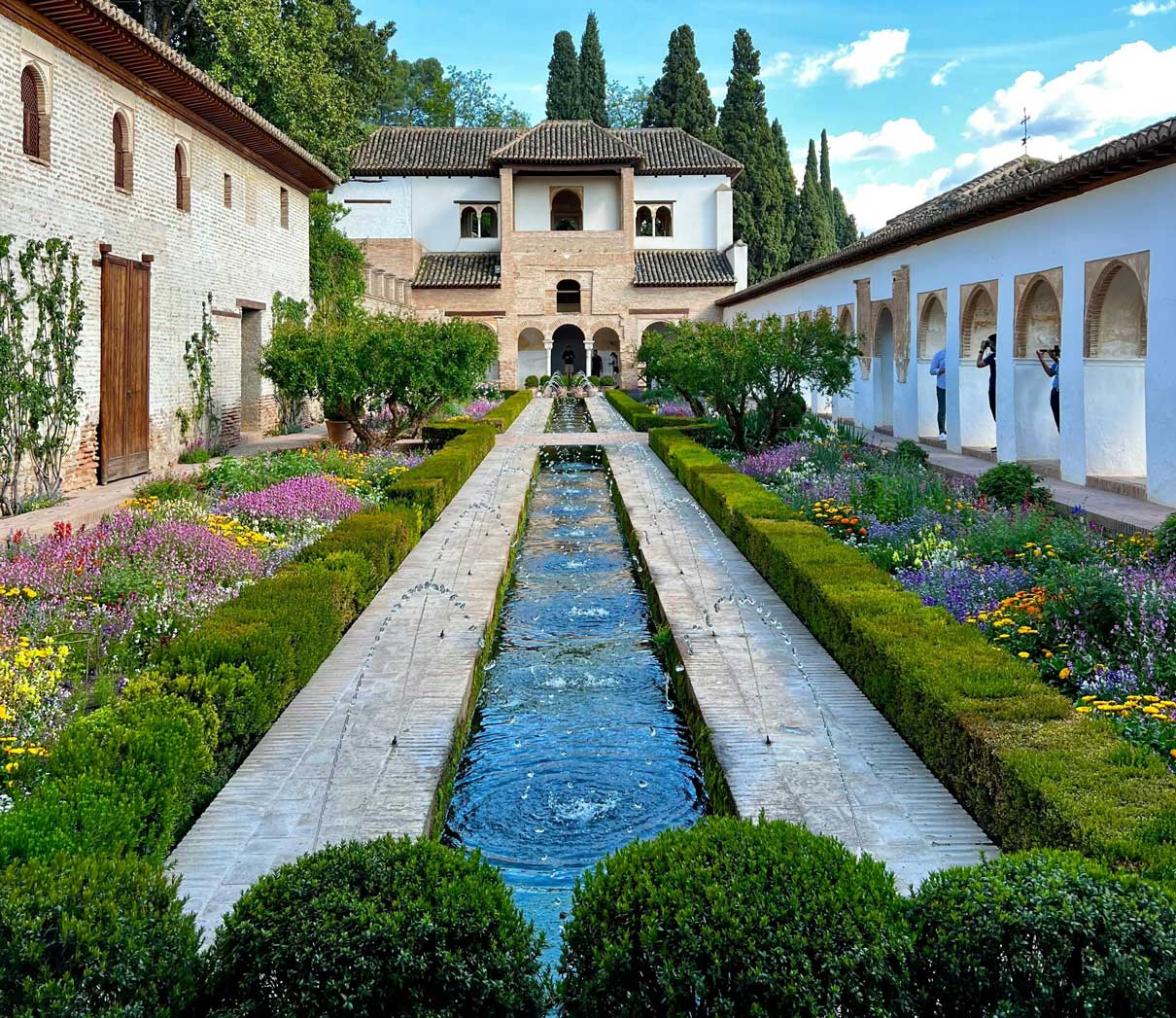
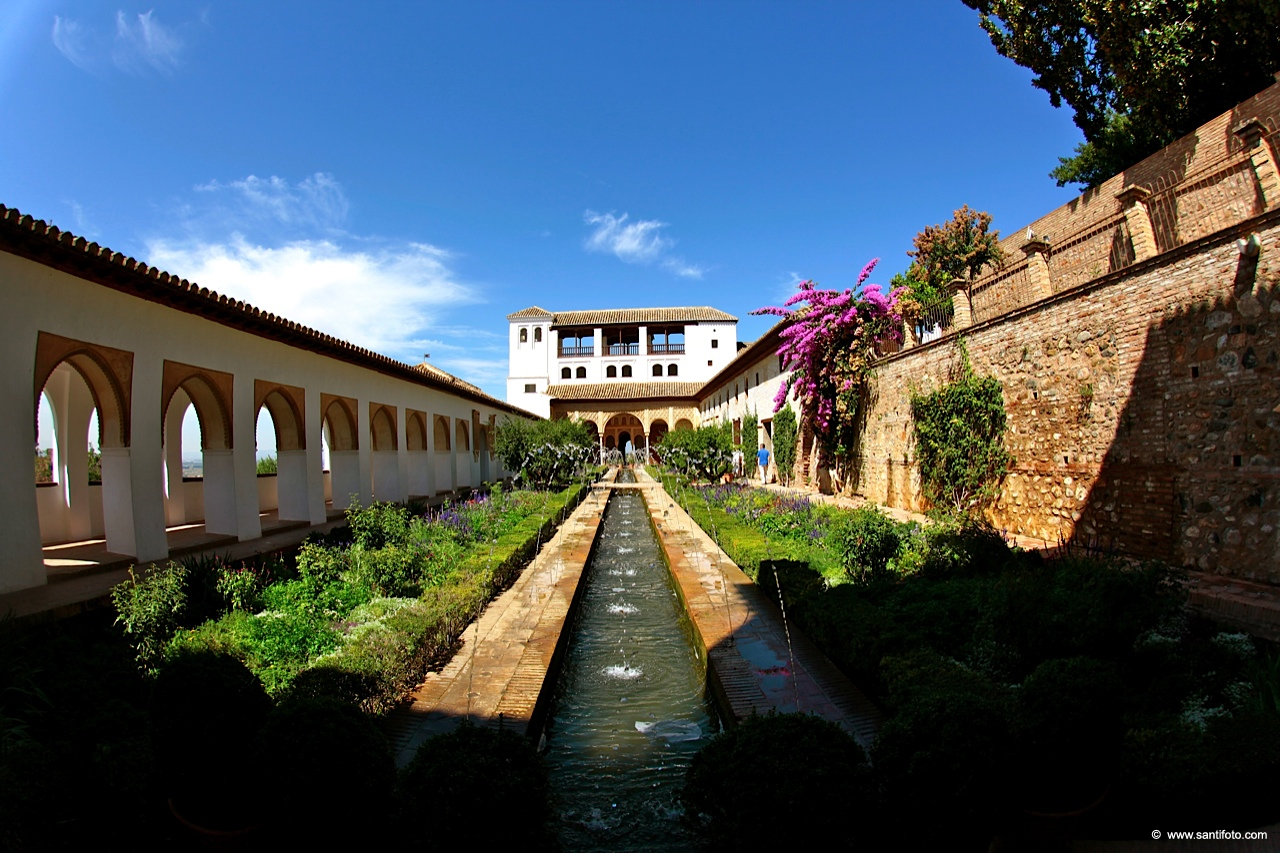
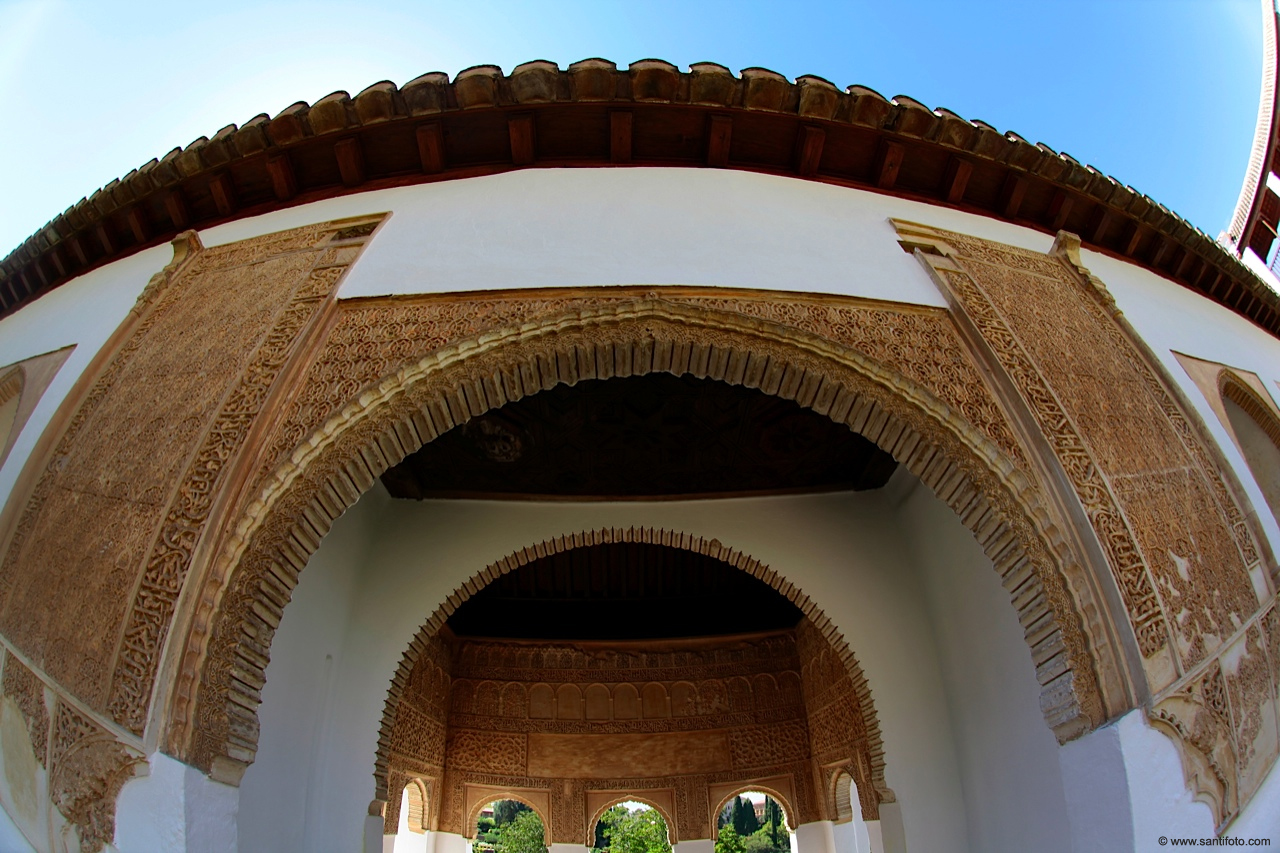
After the conquest of Granada, the Catholic Monarchs granted the Generalife to the Venegas family of Granada. The main avenue leads to the Patio de la Acequia — the most celebrated space and the true heart of the palace. On the west side is a gallery of 18 arches. The north portico, known as the Mirador, has five arches at the front and three more behind, made of marble. Through the north portico one enters the Cypress Courtyard, which has a pool at its centre.
A stone staircase leads up to the Upper Gardens, once planted with olive trees and now transformed into an esplanade of beautiful modern gardens. Here one finds the water jets described by Navagiero in the 16th century. Following the staircase, one arrives at a modern, functional multi-storey building. At its far end stands the great open-air stage used for the Annual International Festival of Music and Dance.
Fascinating facts about the Alhambra
— Spain's largest city in its time: In the 15th century, the Islamic kingdom of Granada had a population of around 500,000 people, and the city of Granada itself had 100,000 inhabitants — making it one of the most populous cities in Europe and the largest in Spain.
— A city within a city: Far more than a palace, the Alhambra was a small walled city with palaces, gardens, mosques, neighbourhoods, storehouses, and workshops.
— The Generalife: The famous summer palace with its lush gardens, fountains, and terraces — a place of rest and recreation for the Nasrid kings.
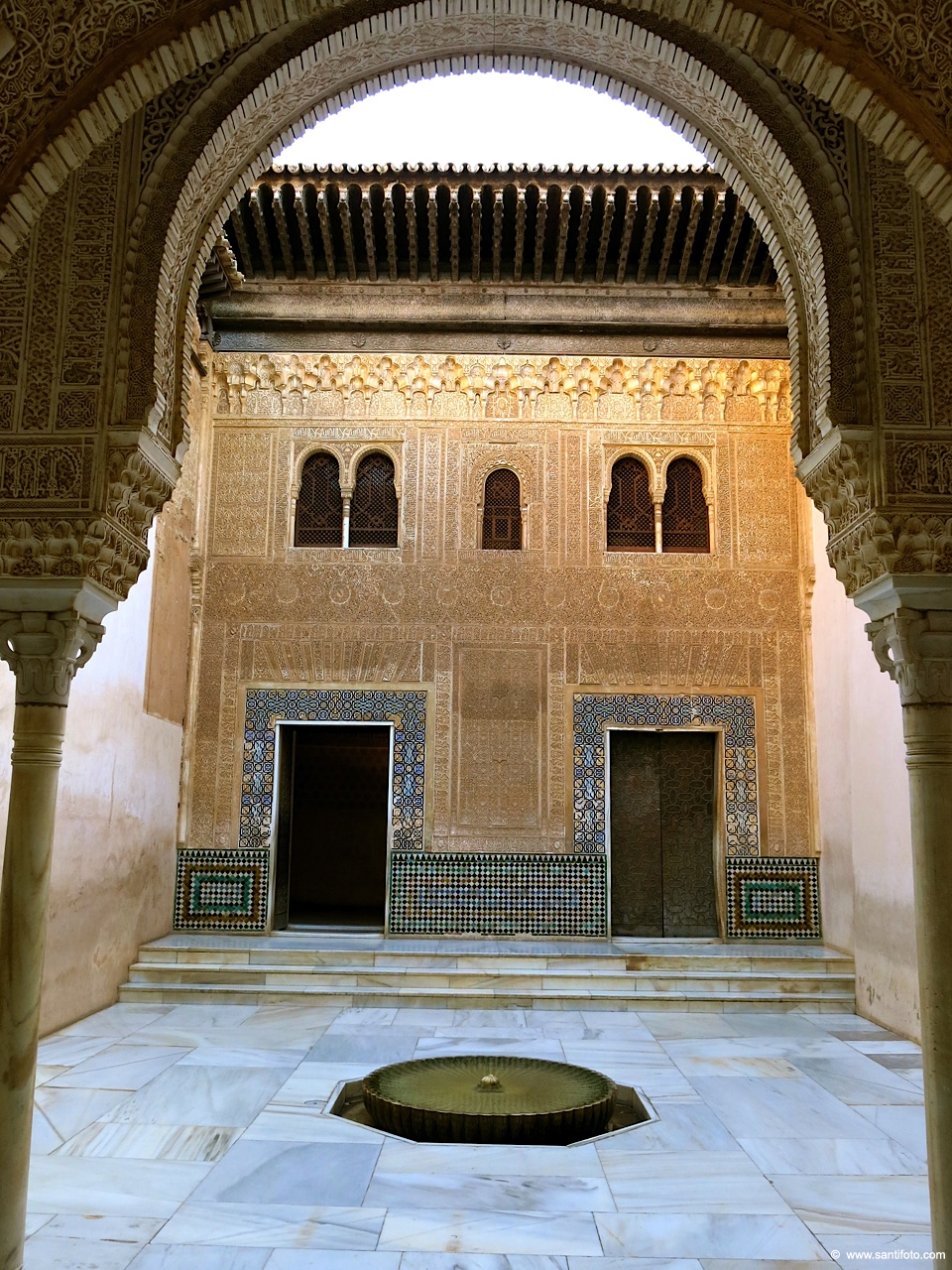
— Breathtaking decoration: The walls are covered with intricate tilework, plasterwork, and Arabic calligraphy, featuring geometric patterns that demonstrate an absolute mastery of symmetry and Islamic art.
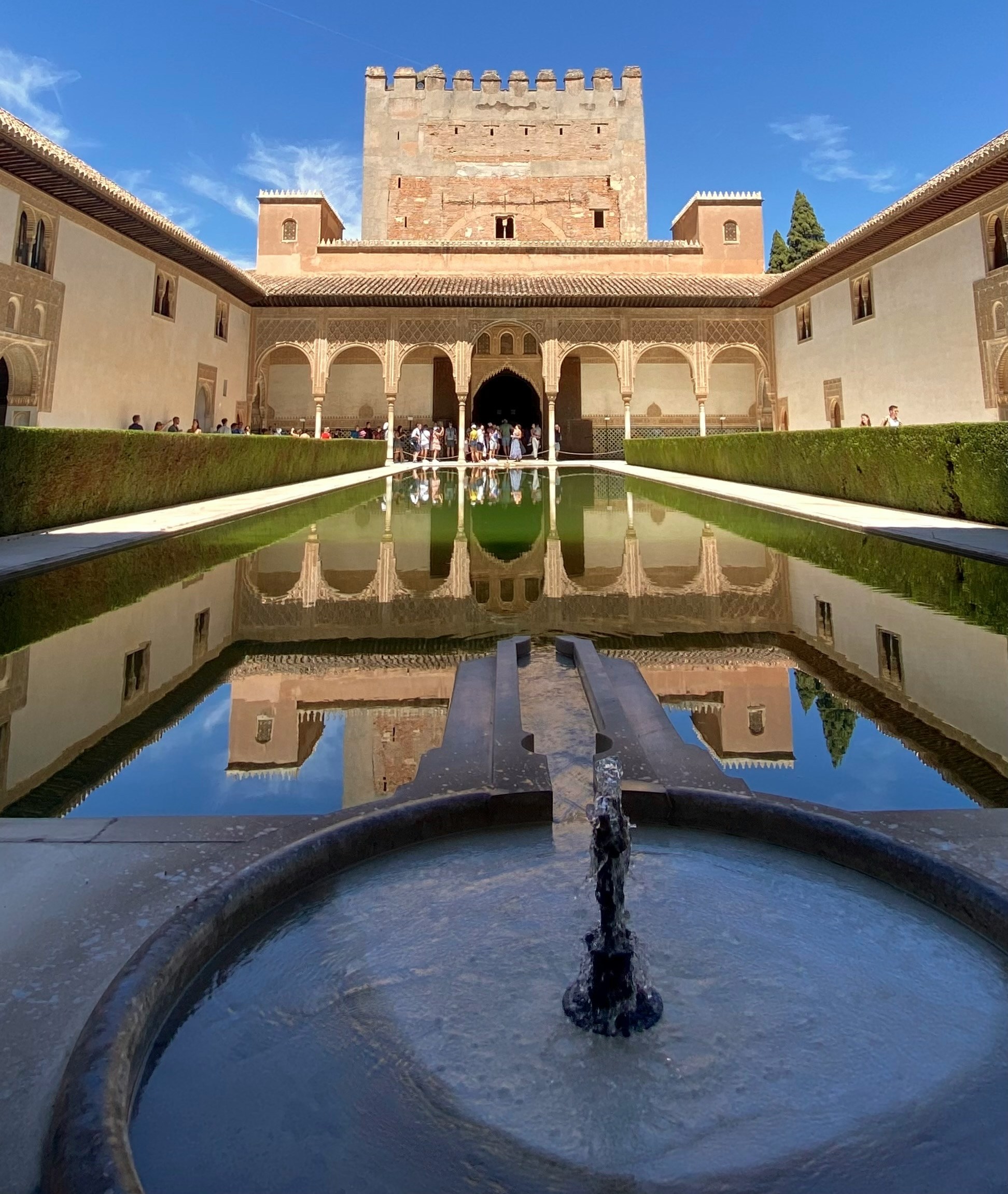
— The power of water: The fountains and channels are not merely decorative — they reflect the profound importance of water in Islamic culture and served to cool the palace in the heat of Granada.
— The mysterious Hall of the Ambassadors: This room — the most important in the Palace of Comares — is believed to have had such perfect acoustics that a person could speak softly and be heard from any corner of the hall.
— Numbers hidden in the art: The plasterwork and tile patterns contain numerical sequences and symbolic messages connected to Islamic religious belief.
— Water as political statement: The channels and fountains did more than cool the air — they symbolised the power of the emir. The ability to command water was a demonstration of authority and wealth.
— The Court of the Lions and astrology: Some scholars believe the arrangement of the lions and fountains represents an astronomical calendar, or the zodiac signs corresponding to the months of the year.
— Recycled columns: Many of the palace columns were reused from earlier constructions, including Roman and Visigothic buildings.
— Doors with secret messages: The Puerta de la Justicia bears an inscription reminding rulers of their obligation to govern justly — showing how architecture served as a moral reminder. Visitors who look closely can find hidden messages throughout the Alhambra.
— Colours that shift with the light: The Alhambra was designed so that its walls and tiles would change colour throughout the day as the sunlight moves — creating a magical, ever-changing effect.
— Animals hidden in the ornamentation: Look closely and you will find animal figures in the decoration — something unusual in Islamic art, which traditionally avoids representations of living beings.
— Influence on writers and artists: The Alhambra inspired Washington Irving, author of Tales of the Alhambra, and its style has influenced Romantic architecture across Europe and modern design throughout the world.
Legends of the Alhambra
— Boabdil's tears: The last Nasrid king, Boabdil, is said to have wept as he left Granada — pausing at a spot now known as "El Suspiro del Moro" (The Moor's Sigh), with the Alhambra spread out below him for the last time.
— The Lady in White: A ghostly figure is said to wander the palace corridors on certain nights, dressed entirely in white — believed to be the spirit of a woman who died within the Alhambra for love or betrayal.
— The hidden treasure: Legend holds that the Nasrid kings concealed a great treasure somewhere within the Alhambra before the surrender. It has never been found — and many visitors feel a curious urge to search for it among the passageways and gardens.
— The enchanted Court of the Lions: Some tales claim that the fountain's lions come to life at night to protect the Alhambra from intruders — always returning to their positions by dawn.
— The bell that must not be rung with ill intent: The bell in the Torre de la Vela is said to bring prosperity when rung with good intentions — but misfortune to anyone who touches it for the wrong reasons.
— The ghosts of traitors: Certain corridors of the Alhambra are considered cursed, haunted by the spirits of ancient conspirators and traitors who still wander them.
— The tree of patience: A legend tells of a tree in the gardens that grants patience and wisdom to whoever finds it — but only if they sit beside it in silence throughout an entire night.
— The Chrysler Building connection: It is said that Walter P. Chrysler was inspired by the Alhambra when designing his famous New York skyscraper. According to the legend, a secret model of the building lies hidden in tunnels beneath the Alhambra, where the architects worked unseen.
— The hidden prince: Some stories tell of Nasrid princes concealed in secret tunnels beneath the Alhambra to protect them from attacks and conspiracies.
— The well of love: In certain gardens, wells are said to grant happiness in love to those who make a wish with a pure heart.
— The enchanted goldfinch: A small stone goldfinch in one of the courtyards is said to sing alone at night to announce the arrival of important visitors.
— The mirror of time: Some accounts claim that a certain pool reflects events from the past — but only to those who gaze into it in silence at midnight.
— The trapped thief: A passageway exists where the ghosts of thieves are said to be forever trapped, endlessly repeating their futile attempts to escape.
— The invisible guardian: A spirit is said to protect the Alhambra's treasures, appearing only to those who approach with ill intent.
— The fountain of secrets: Whoever drinks from the water of a certain fountain in silence is said to receive visions of past events that took place within the palace.
— The headless horseman: A headless rider is said to appear occasionally in the corridors and courtyards — a ghostly reminder of ancient Nasrid battles.
— The shadows of the Generalife: On certain nights, shadows are said to dance in the gardens — as though the palace's ancient inhabitants were still holding their banquets.
— The echo of whispers: In certain narrow passageways, ancient whispers can be heard — supposedly the voices of conspirators who once plotted their intrigues within these very walls.
.JPG)